Do not jump
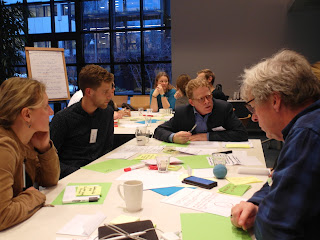
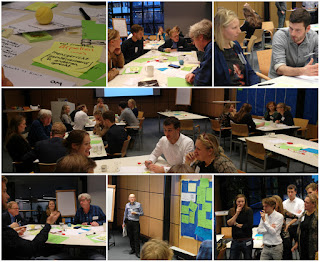
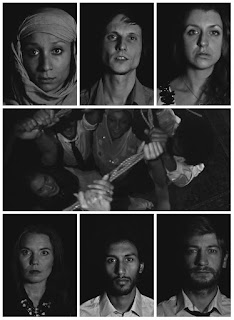
to conclusions too quickly! That is the message in the Brainteaser, visualized
by Nicole Kienhuis and Simon Koolwijk. Patience
can be a valuable attitude in decision making.
Watch the Brainteaser:
Simon Koolwijk
International consultant in (online) facilitation, videomaking & organisational development
Tuesday, May 21, 2013
Thursday, May 2, 2013
Facilitation skills as a key requirement for evaluators
Is monitoring and evaluation a hype? Or is a
sustainable change taking place in international development, that embeds M
& E processes in the structures of organizations, governments and projects? According to Michael Quinn
Patton, lecturer in the E-learning course “Emerging practices in development evaluations”
offered by MyMandE, the demand for M & E has increased
dramatically during the last couple of years in international development. Due to the increasing demand from citizens,
civil society and donor organizations for more accountability and transparency,
governments and development organizations are investing more and more in M
& E systems, staff training in M & E, mid-term reviews, learning
networks and evaluations. Knowledge exchange and an increasing need for ‘lesson
learning’ under development professionals accelerates this demand.
M & E processes
become ownership driven
The client
is increasingly becoming the starting point of evaluations. M & E processes become more client- and
less donor driven. The role of donors is changing from the demanding,
controlling and directive investor into
the supportive and guiding partner.
Evidence which is showing this development towards ownership driven
evaluations are:
- Learning questions, stakeholders and evaluation tools are formulated by the client with support of the evaluator;
- Project management and staff are fully involved in the evaluation design, data collection, analysis and the process of formulation of conclusions and recommendations;
- (Mid-term) Evaluations become a tool of lesson learning;
- Project indicators are aligned with National indicators;
- Governments and local development organizations increasingly invest in capacity development of their staff and structures facilitating monitoring & evaluation practices;
- Electronic discussions groups, such as Yammer, Linkedin and Facebook are used as tools supporting knowledge exchange processes between development professionals.
Watch the
video: Introduction to Evaluation:
A changing role of the
evaluator
These
development show that indeed a sustainable change is taking place. M &E is
becoming a necessity and essential activity in organizational development and
project interventions supporting organizational performance and lesson
learning. This transformation that is
taking place in the profession of M & E, is putting new demands and
requirements on the evaluator. For
enabling the delivery of quality evaluations, the evaluator requires:
- Good communication and facilitation skills;
- Knowledge and experience in using and applying social media and internet tools;
- Experience in applying wide diversity of evaluation tools. Knows how to collect and analyse statistical data complemented by video or visual methods;
- Didactical skills in explaining concepts and practices about M & E;
- Leadership skills to facilitate mid-term reviews or evaluations involving local staff and beneficiaries;
- Expertise to encourage exchange about ‘benchmarks’ or ‘best practices’ in the domain the evaluator is doing his evaluation.
Evaluation
becomes ownership driven. The project implementing organisation is the driver
in its own M & E process. The evaluator is moving from an expert to an
expert having facilitating and communication skills as a key requirement.
| Reacties: |
Thursday, April 18, 2013
Playful connections: The Social Media Energizer
Playful
connections is the second exercise – energizer Nicole Kienhuis and SimonKoolwijk visualized by video. The exercise can be applied as a warm-up, icebreaker or a fun
game at trainings or facilitation events, especially as an introduction to
discuss issues on social media. Watch:
Playful connections – The Social Media Energizer.
Labels:
creativity,
energizer,
exercises,
fun learning,
icebreaker
| Reacties: |
Sunday, March 24, 2013
Energizer – Recognize changes
In 2012
Nicole Kienhuis and Simon Koolwijk filmed a series of energizers. Starting from March up to November ’13 we will share each month an energizer – icebreaker, which
you can apply in a training or workshop.
Watch the first one >>>>>>> ‘Recognize
changes’
Labels:
creativity,
energizer,
exercises,
fun learning,
icebreaker
| Reacties: |
Sunday, January 20, 2013
Characteristics of a powerful video story – Nine examples
If you developing a video story, there a number of key
questions you have to ask yourself before you start filming:
- What is the story about?
- Why are you filming this story? What is the purpose you want to accomplish?
- Who will be the target audience? And what is the essence you want to communicate to them? And how are you planning to disseminate this video?
- What is the context? What is the background of the story? When did it take place? From whom’s perspective is the story told?
- Where is the videomaking taking place? What is the setting and the environment where you are filming? What videoshots do you want to make?
- Who are the actors in the video?
- What is the language and the subtitlng?
- What is the estimated time span of the video?
- When? Where? And How are you going to do the filming?
- What will be the structure and logic of the story? What are a number of principles you apply in the video you are producing?
- What kind of music will be supporting the story? Are you planning to use a voice over for telling your story?
All the aforementioned questions will help you or your
videomaking team to develop the story board.
However, the filming and the video editing phase are following crucial
steps in making an attractive video.
There are five characteristics
that help to build a powerful story.
The video is:
- Engaging from the beginning to the end
- Having elements of surprise
- Finalizing with a clue at the end
- Contains humor
- Simple, short and visually attractive.
Following is a compilation of powerful stories, which are
having some of these characteristics.
A.
Engaging from the beginning to the end
1. Crisis in the Congo (26
min.)
This video describes in an involving way
the causes and the effects of the crisis in Eastern Congo. This documentary composed of interviews with a number of key experts
explaining the history and the current situation describing the civil war and
the role of the international community and international businesses in this
conflict. The video story is well built up supported by visuals and engaging from
the beginning to the end. See video; Crisis
in the Congo…..
2. The story of milk (3 min)
In this story the visual images help to
support the story teller. Throughout the video a feeling is created about
something magical and mystical. Dreaming and imagination drive the story and
keep me as a watcher involved. See video; The story of milk.
B. Surprise
3. Photocopier
(1 min.)
This advertisement has a nice surprise at
the end. Machines also has a life and their tastes. See video Photocopier.
4. A squirrel playing soccer(1 min)
What makes a squirrel to play soccer? The
video shows something that you would not expect an animal would do. See video; A squirrel
playing soccer
C.
Clue is at the end
5. The Bridge with Paul E. Hendricks (13 min.)
An actual life story on how the interviewed
person develops in his relationship with his partner. The clue about his life learning is at the
end. See video; The
Bridge with Paul E. Hendricks.
D.
Humor
6. Nolan ’s Cheddar
(1 min.)
On a funny and humoristic way, the video
shows what cheese can do with a mouse. The music supports the video on a
powerful way. See video; Nolan’s Cheddar
7. A Pepsi please! (1 min)
This is a
girl who wants the real Pepsi.
She communicates and uses the language in the setting she is ordering
her cola. See video; A Pepsi please!
E.
Simple,short and visually attractive
8. Nobody tells who are beginners (2 min)
This video has the principles of KISS. Keep It Short and Simple. The video explains that creativity and
success does not come by itself. It needs determination and persistance. See video; Nobody
tells who are beginners
9. Hans Rosling’s 200 countries, 200 years in 4
minutes (4 min.)
In 4 minutes a powerful lecture is given on
how the status has been developing in 200 countries around the world. Again the
story is simple, short and visually powerful in its communication. See video; Hans Rosling’s 200 countries, 200 years in 4
minutes.
If you want to read more on how to develop a story watch the
slide share presentation about Building
Story Worlds. Or watch the video >>>
MSL Group Story telling – why is story telling important?
Labels:
storytelling,
videomaking
| Reacties: |
Subscribe to:
Posts (Atom)